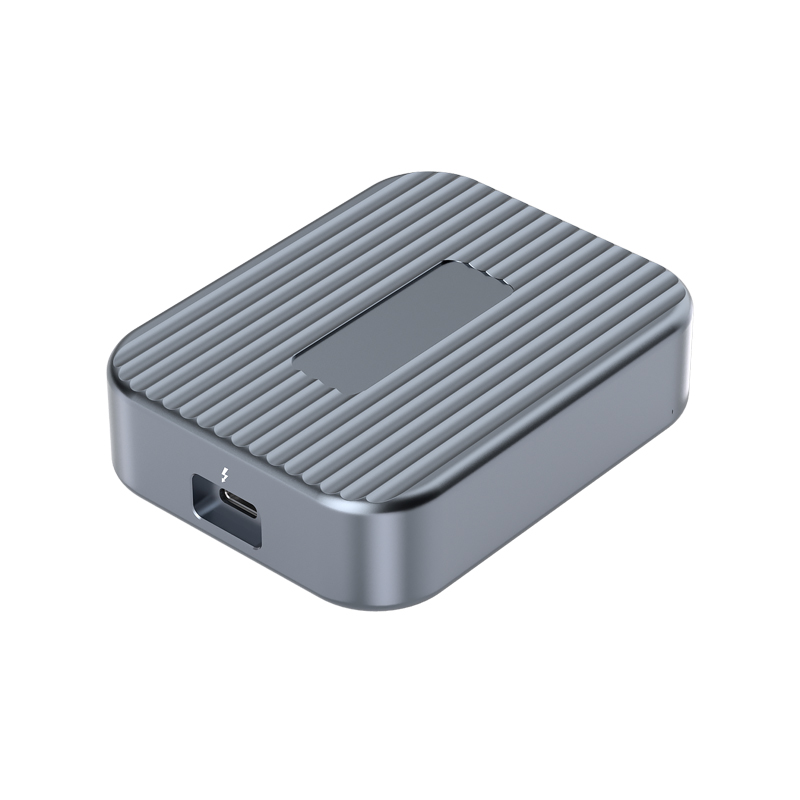
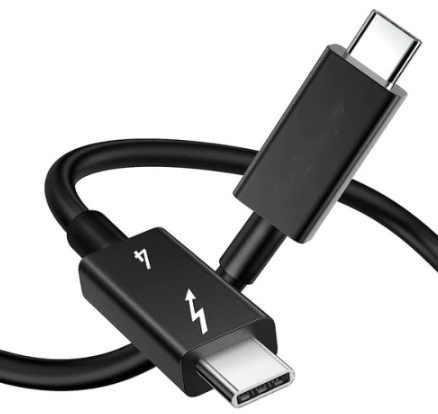
Thunderbolt is a high-speed protocol developed by Intel that delivers power and dynamically adjusts data and video bandwidth based on usage. It is also now the basis for the USB4 specification.
Thunderbolt 4 and USB4 products will use the same underlying protocol specifications to improve overall compatibility of products using USB-C. However, TB4 (Thunderbolt 4) takes USB4 to the next level by providing a more complete version of USB-C and a superset of features that USB4 does not require.
What’s new in Thunderbolt 4?
First, Thunderbolt 4 will comply with the USB4 specification and maintain the industry-leading 40Gb/s performance of its Thunderbolt 3 predecessor.
Dual channel display interface
Thunderbolt 4 proposes and standardizes minimum host system requirements. It offers 40Gb/s, two 4K displays or one 8K display, and 32Gb/s of PCIe data on all ports, effectively doubling the minimum expectations for Thunderbolt 3.
For example, the MacBook Pro (13-inch, 2016, four Thunderbolt 3 ports) has two 40Gb/s ports on the left and two 20Gb/s ports on the right. 1 This means that specific port will limit PCIe speed to 16Gb/s and only support one 4K monitor. With Thunderbolt 4, this is not allowed – all four ports require 40Gb/s.
Accessory with four Thunderbolt ports
Universal 40Gb/s cable up to 2 meters
Required PC charging power up to 100W on at least one port
Required for computer "wake from sleep" when connected to Thunderbolt dock
Required direct memory access (DMA) protection