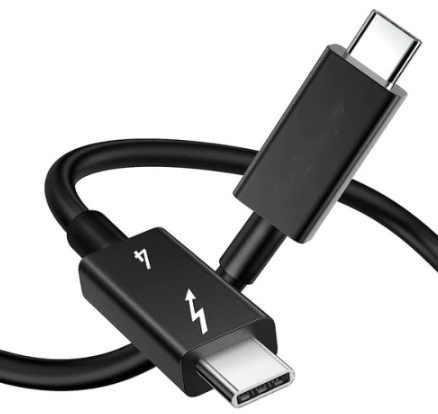
The dawn of USB4 has shone on the technology world. As a disruptive innovation, it will redefine the way we transfer data, power and connect peripherals. This article will take a deep look at the main features of USB4, compatibility, integration with Thunderbolt 3, and its potential technological impact.
USB4's core advantages
USB4 brings unprecedented speed improvement, with a maximum data transfer rate of up to 40 Gbps, which is twice the speed of the USB 3.2 standard. In addition, with USB Power Delivery (USB PD) 3.0 support, USB4 can provide up to 100W of power for faster and more efficient device charging. In terms of display support, USB4 is capable of high-resolution video and data transfer at the same time, making it an ideal choice for advanced applications such as virtual reality (VR) and 8K video streaming.
Speed Comparison: USB4 vs. USB3.2
To truly appreciate the leap forward that USB4 represents, let's compare its data transfer capabilities to those of USB3.2. While USB3.2 Gen 2x2 offers a respectable 20 Gbps transfer rate, USB4 doubles this speed to an astounding 40 Gbps. This means that transferring a 25GB file would take just under 5 seconds with USB4, whereas it would require nearly 10 seconds with USB3.2.
| Feature |
USB 3.2 |
USB4 |
| Data Transfer Rate |
20 Gbps (Gen 2x2) |
40 Gbps |
| Power Delivery (USB PD) |
Up to 100W |
Up to 100W |
| Display Support |
Limited |
Enhanced (4K, 8K, VR) |
| Thunderbolt 3 Compatibility |
No |
Yes |
| Connector Type |
Type-A, Type-C |
Type-C |
| Backward Compatibility |
USB 3.1, USB 3.0, USB 2.0 |
USB 3.2, USB 2.0, Thunderbolt 3 |
Wide compatibility and convenient connection
USB4 is designed with full consideration of backward compatibility, ensuring seamless cooperation with USB 3.2, USB 2.0 and Thunderbolt 3 devices, which means that users can continue to use existing USB cables and devices without any loss of functionality. At the same time, USB4 uses a reversible USB Type-C connector to simplify the user experience and allow easy one-handed connection.
Perfect integration of Thunderbolt 3 technology
The integration of USB4 with Thunderbolt 3 technology is one of its most significant advancements. By integrating Intel's Thunderbolt 3 protocol, USB4 provides a truly universal solution that bridges the gap between USB and Thunderbolt. This development brings increased versatility, allowing a variety of peripherals such as displays, storage devices and even external graphics cards to be connected using a single cable. At the same time, it simplifies setup and reduces the need for multiple cables and adapters, creating a cleaner and more streamlined workspace. Combining USB4's 40Gbps transfer rate with Thunderbolt 3's low latency, high bandwidth capabilities enables optimal performance for data-intensive applications and high-resolution displays.
USB4's wide range of application scenarios
The introduction of USB4 has made many use cases that were previously impractical or impossible possible. For example, with a transfer rate of 40 Gbps, users can quickly move large files between devices, making USB4 an ideal choice for professionals such as photographers, videographers, and others who often deal with large amounts of data. At the same time, its amazing bandwidth allows for smooth transmission of 4K and 8K video content, changing the way we consume and create high-definition media. In addition, USB4's low latency and high-speed capabilities make it ideal for immersive virtual reality experiences and demanding gaming setups.
Future Outlook for USB Technology
As USB4 continues to develop, it is expected to reshape the connectivity and data transfer landscape. With the rapid advancement of technology, we can expect USB4 to play a key role in the development of new devices, peripherals, and applications. Its potential to drive innovation and enhance user experience is almost unlimited, making USB4 a true game changer in the technology world.