As a game enthusiast, you're well aware that smooth visuals and stable device connectivity are paramount for immersive gameplay. When evaluating game streaming solutions, is investing in fiber optic HDMI cables truly worthwhile? Let's reexamine the core logic while seamlessly integrating practical equipment solutions.
First, establish the foundation: HDMI remains the gold standard for connecting gaming consoles to displays due to its uncompressed audio-video transmission capability. However, traditional copper HDMI cables have inherent limitations in long-distance transmission—beyond 7 meters, they become susceptible to electromagnetic interference causing signal degradation, with risks of screen tearing and latency spiking over 15 meters. This is precisely the pain point for gamers setting up across large rooms or multi-room layouts.
How does fiber optic HDMI break this bottleneck? Its technical essence lies in replacing electrical signals with optical transmission. Through built-in laser emitters and optoelectronic conversion modules, data travels as light pulses through glass fibers, enabling zero-loss transmission over 30+ meters. Take the AV Access 8KH15 model as an example: it supports 8K@60Hz and 4K@120Hz refresh rates, paired with HDMI 2.1's 48Gbps bandwidth to flawlessly handle gaming features like VRR, ALLM, and QFT—eliminating motion blur and input lag completely.
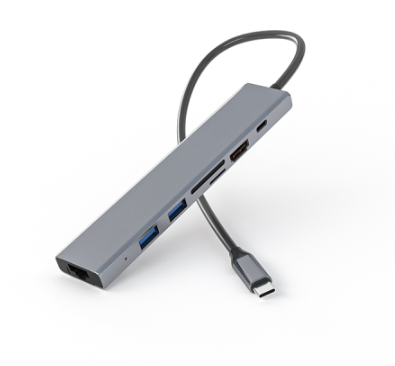
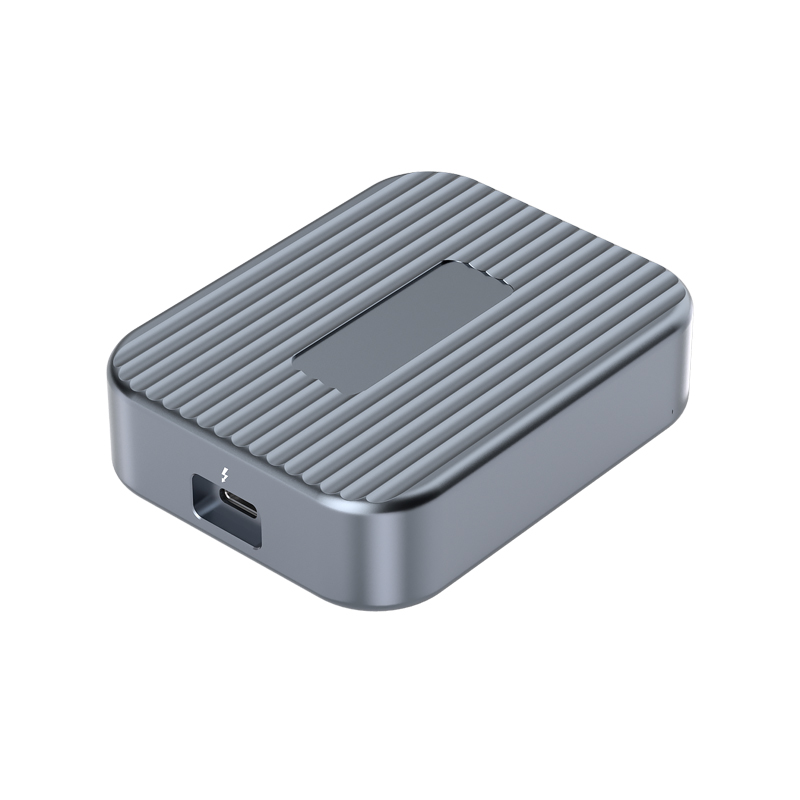
Beyond long-distance stability, fiber optics excel in interference immunity. While copper cables suffer from EMI/RFI noise from routers or wireless devices, optical signals remain untouched by such disturbances, ensuring crystal-clear visuals. Notably, some premium fiber cables feature detachable designs. When paired with devices like the PURPLELEC CM067 dock, they enable flexible interface expansion. The CM067's Type-C port supports simultaneous video/data transmission, allowing seamless switching between gaming consoles, tablets, and laptops for multi-scenario use.
Yet fiber HDMI isn't flawless. It requires directional installation—cables are marked with "source" and "display" ends to avoid misconnection. Despite being flexible, excessive bending risks damaging internal fibers. Cost-wise, they're 3-5 times pricier than copper cables, making them more suitable for mid-to-high-end gamers demanding ultimate quality.
The decision-making logic is straightforward: For short-distance setups under 3 meters, premium copper HDMI suffices without extra cost. But for distances exceeding 10 meters, or when chasing 8K/120Hz perfection and multi-device quick-switching needs, the fiber HDMI + CM067 dock combo fundamentally solves signal loss and port shortage issues. This ensures every controller input translates instantly to screen actions, delivering true "what you see is what you control" pro-grade gaming. For players chasing excellence, this investment is undeniably justified.