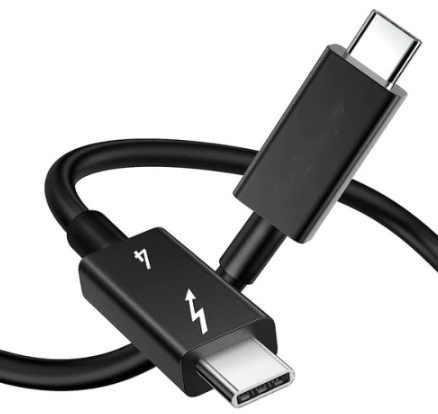
USB (Universal Serial Bus) technology serves as the standard connection solution between computers and peripheral devices. Its physical cables are typically limited to a range of 5 meters (approximately 16 feet). When this length is exceeded, USB signals begin to degrade, forcing peripherals to be placed in close proximity to the host computer. However, in scenarios requiring extended reach, USB extenders emerge as a critical technical solution—how do these devices operate, and what are their underlying principles? This article provides an in-depth analysis.
A USB extender is a specialized device designed to overcome the physical length limitations of standard USB cables. While conventional USB data lines are renowned for high-speed, stable data transmission, their short length often fails to meet long-distance connection needs in industrial monitoring, conference systems, and other specialized environments. Although various extension solutions exist—including USB extension cables, wireless USB, and more—this piece focuses on USB extenders, a relatively niche tool frequently overlooked by general users but indispensable in professional settings.
Structurally, a USB extender consists of a transmitter and a receiver, utilizing CATx standard cables to bridge the distance between host devices and peripherals. During deployment, the host (e.g., a computer or PlayStation) connects to the transmitter, while peripherals like keyboards or cameras link to the receiver. By connecting both ends with CAT5/6 or higher-grade cables, signals can be transmitted over long distances. Depending on cable specifications, these devices generally support transmission ranges up to 50 meters (164 feet), with actual reach directly determined by cable length and quality.
The operational principles can be explained through three technical dimensions: First, modern USB extenders incorporate voltage enhancement modules that boost signal strength to meet engineering standards, ensuring stable peripheral operation even at a distance. Second, they enable bidirectional signal conversion, supporting data exchange over CAT5 or higher-tier cables. Third, through proprietary protocol optimization, they effectively counteract signal attenuation and interference during long-distance transmission, guaranteeing data integrity and real-time performance.
This technology not only solves the traditional USB cable length bottleneck but also demonstrates unique value in industrial control, digital signage, remote desktops, and other scenarios. By understanding its working principles and technical characteristics, users can more precisely select appropriate extender models to achieve secure and reliable long-distance USB connections.