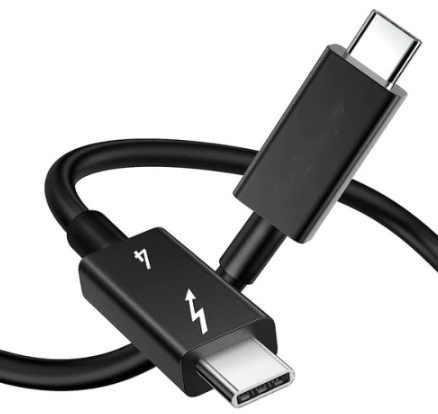
Under the background of the EU's legislation mandating the adoption of a unified charging interface, Apple Inc. first adopted the Type-C interface for its iPhone 15 series in 2023. This move is not only an inevitable choice for technological iteration but also reflects the deep-level transformation of the consumer electronics industry in the three dimensions of environmental protection, efficiency, and user experience.
Policy-Driven Compulsion: EU Legislation Breaks Down Interface Barriers
The EU passed an amendment to the Radio Equipment Directive in 2022, requiring all electronic devices sold in Europe to be equipped with a USB-C interface by the end of 2024. Behind this legislation are the goals of saving consumers €250 million annually and reducing over a thousand tons of e-waste. Although Apple had previously opposed it on the grounds of "stifling innovation," it finally compromised with the Type-C interface for the iPhone 15 series—even though the base model still retains the USB 2.0 protocol, limiting charging power. However, the Pro series has achieved a USB 3.2 protocol-supported transmission rate of 10 Gbps, demonstrating the effectiveness of policy-driven technological upgrades.
Technological Generation Gap: The All-Around Advantages of Type-C
With its reversible blind-plug design, USB4 transmission standard of 40 Gbps, and 100W PD fast-charging capability, the Type-C interface has formed an overwhelming advantage over Lightning. Take Apple's self-developed chips as an example. The M1-chip MacBook achieves 8K video output and 60W fast charging through Type-C, while Lightning, limited by its patent architecture, has long stagnated at a data transmission rate of 480 Mbps. More crucially, the ecological compatibility of Type-C—from Android phones to industrial equipment, from laptops to in-car systems—forms a seamless connection ecosystem across brands and devices, which contrasts sharply with Apple's closed accessory ecosystem under the MFi certification system.
Environmental and Cost Considerations: The Survival Wisdom in the Era of Carbon Reduction
The EU estimates that a unified interface could reduce carbon emissions equivalent to 1,000 small power plants annually. Apple had already completed the Type-C switch for products like the iPad Pro and MacBook, and this shift for the iPhone is essentially the closing of the loop for its environmental strategy across all product lines. More realistically, cost considerations also play a role: Lightning cables require built-in MFi certification chips, resulting in a cost of 15 yuan per cable, while Type-C cables, through large-scale production, can compress costs to less than 3 yuan. This change in cost structure allows Apple to maintain accessory profits while attracting more third-party accessory manufacturers through an open ecosystem.
Iteration of User Demand: From Passive Adaptation to Active Choice
User surveys show that over 70% of consumers rank "interface universality" among the top three factors in their purchase decisions. The popularity of the Type-C interface in the Android camp has already led to a shift in user habits, and if Apple were to cling to Lightning, it would face the risk of losing market share. More profoundly, the multi-protocol expansion capabilities supported by Type-C—such as DisplayPort video output and Thunderbolt 3 high-speed transmission—reserve a technical channel for future scenarios like AR/VR devices and external graphics cards. This forward-looking layout is a key signal of Apple's transition from a "closed ecosystem" to "open innovation."
Reconstruction of the Industrial Landscape: From Monopoly to Symbiosis in the Ecosystem
The deep logic behind Apple's shift to Type-C lies in the transition from "interface monopoly" to "standard co-construction." By adopting an international universal standard, Apple not only avoids the risk of EU fines but also gains a passport to enter emerging markets—such as India and Brazil, which are following the EU's interface legislation. At the same time, the popularity of Type-C has given birth to new tracks such as gallium nitride fast charging and intelligent power management. Apple, through the moderate opening of its MFi certification system, has absorbed high-quality accessory manufacturers such as Anker Innovation and Belkin while maintaining quality control, forming a virtuous cycle of "standard unification - ecological prosperity - profit sharing."
Conclusion: The Evolutionary The-ory Behind the Interface Revolution
Apple's interface transformation is by no means a simple technological compromise but a microcosm of the consumer electronics industry's leap from "hardware competition" to "ecological competition." When Type-C becomes a global universal standard, it not only eliminates users' "cable anxiety" but also promotes the entire industry chain to upgrade towards green and intelligent development. This transformation teaches us that in today's era of rapid technological iteration, open cooperation is more vital than closed monopoly, and true innovation always occurs at the balance point between standard unification and individual needs.